Gourd Chess: The Journey

Gourd Go

A gourd holds the universe; Go embodies wisdom.

One device, one game. Same source, same fun.

The gourd, homophonous with "fortune and rank," has long been a symbol of good luck. Its round, plump shape and hollow interior represent inclusiveness and accumulation, making it one of the most common and familiar objects in agrarian civilization.

Go, played on a 19x19 grid with black and white stones, has rules that are simple yet yield infinite complexity. The ancients called it "hand conversation" or "sitting in seclusion," viewing it as a path to self-cultivation.

One is a vessel, the other a play. Seemingly unrelated, they share a profound spiritual resonance in Eastern culture—both honor the balance between emptiness and form, respect the passage of time, and transform simple forms into endless meaning.

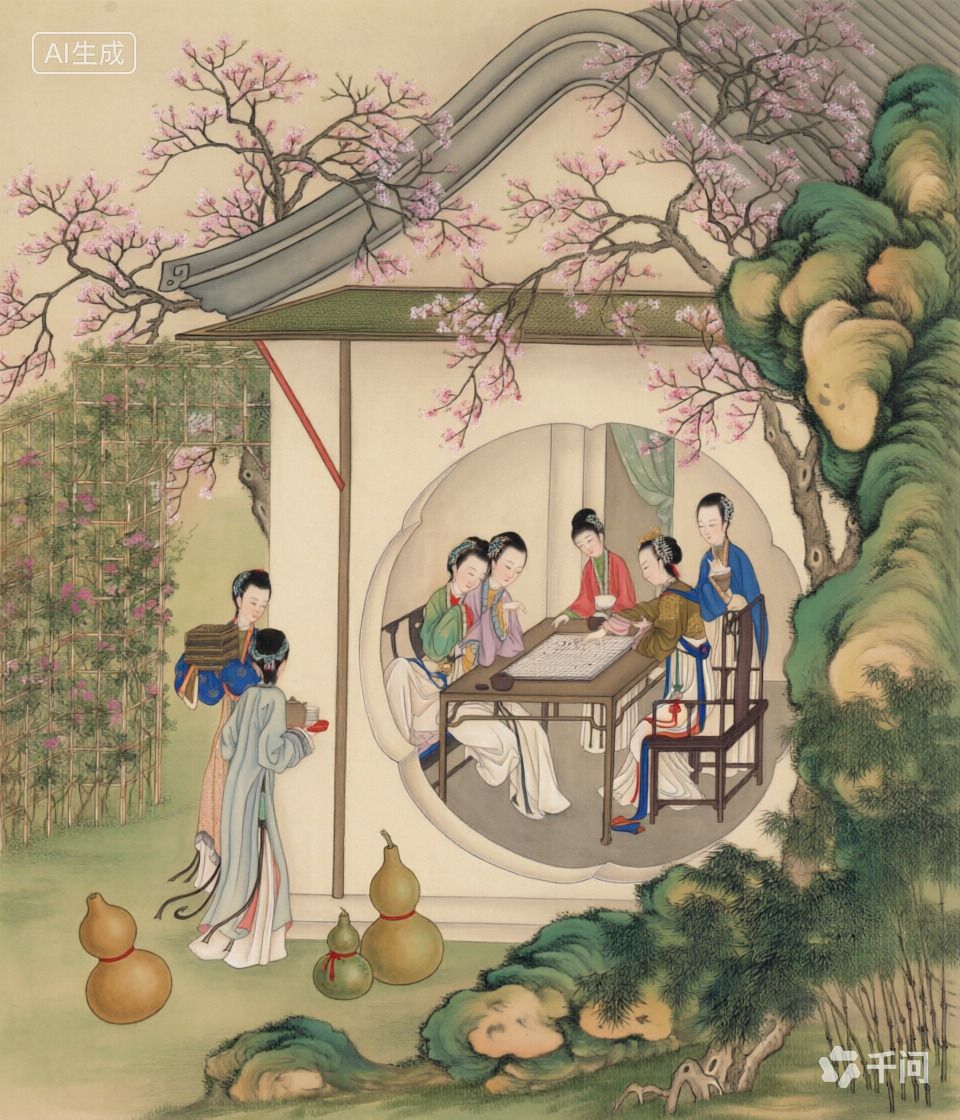
Illustration of a lady playing chess with a gourd
Hulu Go Website HLWQ.TOP

Quad Resonance

From form to philosophy, from object to state of mind: the gourd and the game of Go resonate across four dimensions.

One

The Way of Balance

The gourd is round and plump; the Go stones are square and orderly. One round, one square—just like the way of heaven and earth.

Ancient Chinese viewed the world through the concept of "round sky, square earth." The gourd grows naturally without forcing straightness; the Go board, with its 19 horizontal and vertical lines, contains infinite possibilities within a small space. The gourd's curves embrace all things, while Go's straight lines define boundaries. Together, they reflect the simplest Chinese understanding of cosmic order.

Children playing chess in a grid learn to balance "rules" and "freedom"—boundaries create true space for creativity.
Two

Where the virtual and real coexist

The gourd is hollow yet holds things; the Go board leaves empty space to create meaning.

A solid gourd is useless; only its hollow center allows it to hold water, medicine, or wine. The same applies to Go: filling the board leaves no room to move; when all liberties are gone, you lose. True masters know the value of emptiness—they plant opportunities where nothing seems to exist and sacrifice local gains for the greater whole.

This is a key point repeatedly emphasized in instruction: do not rush to fill every spot. First, learn to judge where to leave space and where to play solidly. The interplay of void and substance, the mutual reliance of presence and absence, lies at the heart of Eastern philosophy and marks the true divide in Go skill.

Three

Nature's Charm

Gourds grow in the fields; Go originates from nature.

Legend holds that ancient people created Go by observing the heavens and studying geography. Its 361 points correspond to the degrees of the celestial sphere, while the black and white stones symbolize yin and yang, night and day. The gourd, meanwhile, is one of the most familiar vessels in agrarian civilization—its vines twist and its fruits hang heavy, growing entirely with nature's timing, without human artifice.

Both originate from the earth, follow natural rhythms, and embody the ancient wisdom of harmony between humanity and nature. Giving children such objects and games is itself a form of natural启蒙.

IV

Scholarly Elegance

Gourds and Go stones: both serve as refined scholarly ornaments.

The traditional study often featured a gourd and a set of Go stones on the desk. The gourd offered both beauty and playfulness, while Go provided contemplation and strategy; together they balanced stillness with movement, elegance with delight. Scholars gathered friends through games and expressed their sentiments through gourds, finding refuge for their inner world in these objects and turning leisure into cultivation.

Today, we may not need such decor, but the gift Go offers children is the mindset of slowing down and finding inner calm.

"

Small as a gourd, it holds heaven and earth; finite as a board, it plays out the infinite.

Learning chess is like nurturing a gourd: it's not about how much you pour in at once, but about the steady accumulation and settling over time. Every game builds your foundation; every moment of thought fosters growth. There's no rush—and none can be forced.

The gourd has form, the game changes, growth leaves no trace.

Nanling Liren
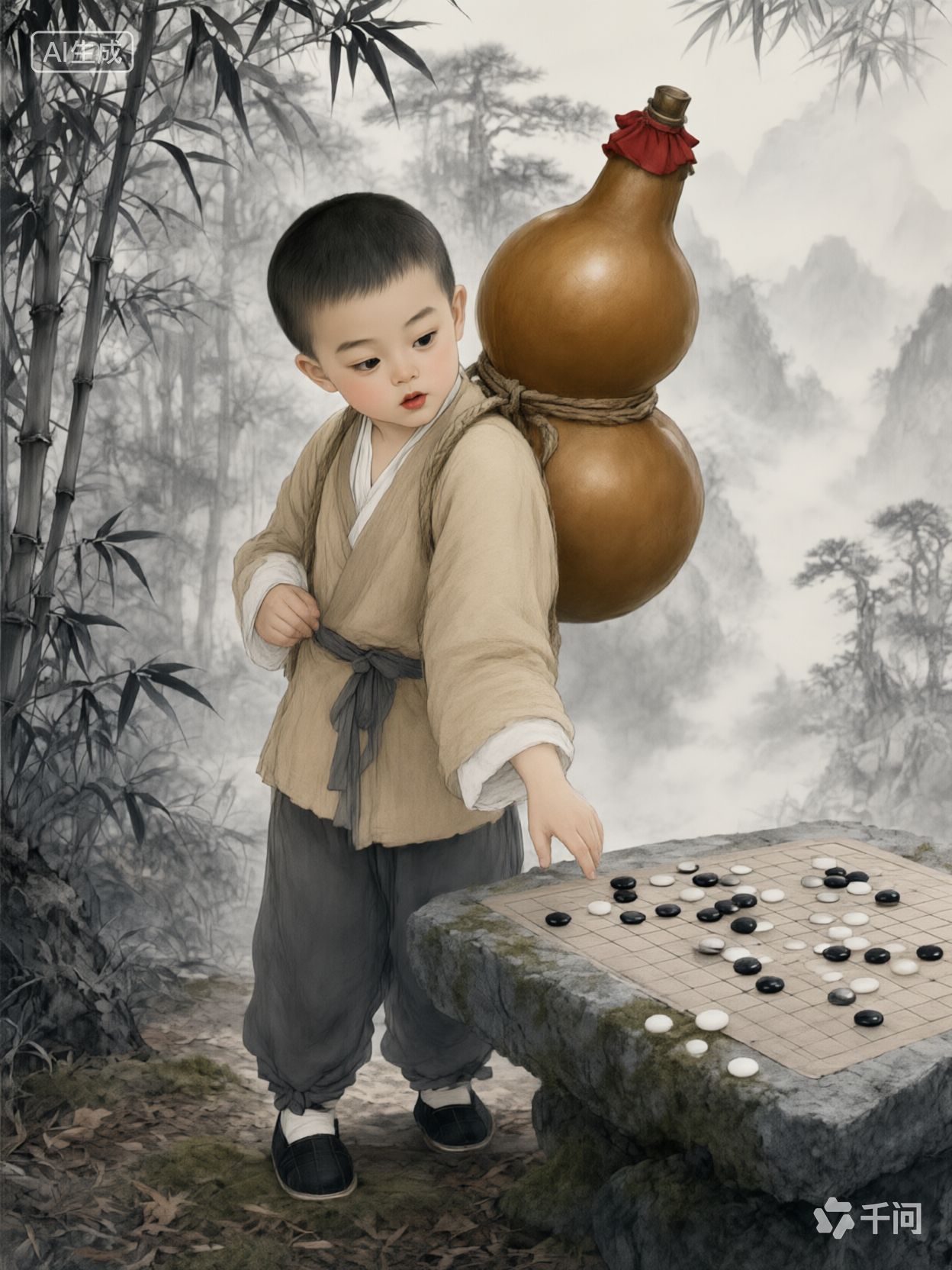
Ink wash painting of a gourd spirit boy playing chess
Hulu Go Website HLWQ.TOP

Share Culture with Children

Teaching Go is more than just rules and joseki. When children realize that the stones in their hands carry three millennia of thought, and that concepts like "liberties" and "eyes" reflect ancient wisdom about securing space, they approach the game with a deeper sense of respect.

Hulu Weiqi uses this cultural connection as the foundation of its teaching: from the gourd's "capacity" to the game's "sacrifice," and from the craft's "slowness" to growth's "stability." While learning chess, children also engage with traditional Chinese aesthetics and ways of thinking.